
Built
to care.
Aerial robots can bring help to an emergency and take tools into hazardous places. We want to build a future in which they help protect people.
A different future for aerial robots.
Think of a drone, and an image of war may come to mind. The association with destruction is understandable. It also gives the people building these machines a responsibility to choose what they are for.
Civilian applications offer another direction: delivering help, inspecting structures and reducing the need for people to enter hazardous places. There are already examples of what that can mean in practice.
Emergency care
Help can arrive through the air.
In a Swedish study of suspected cardiac arrests, drones delivered an automated external defibrillator (AED) ahead of an ambulance in 37 of 55 cases with comparable arrival times. [1]
Two patients received a shock from a drone-delivered AED before the ambulance arrived; one survived to 30 days. The aircraft brought the equipment, and people on the ground used it to provide care.
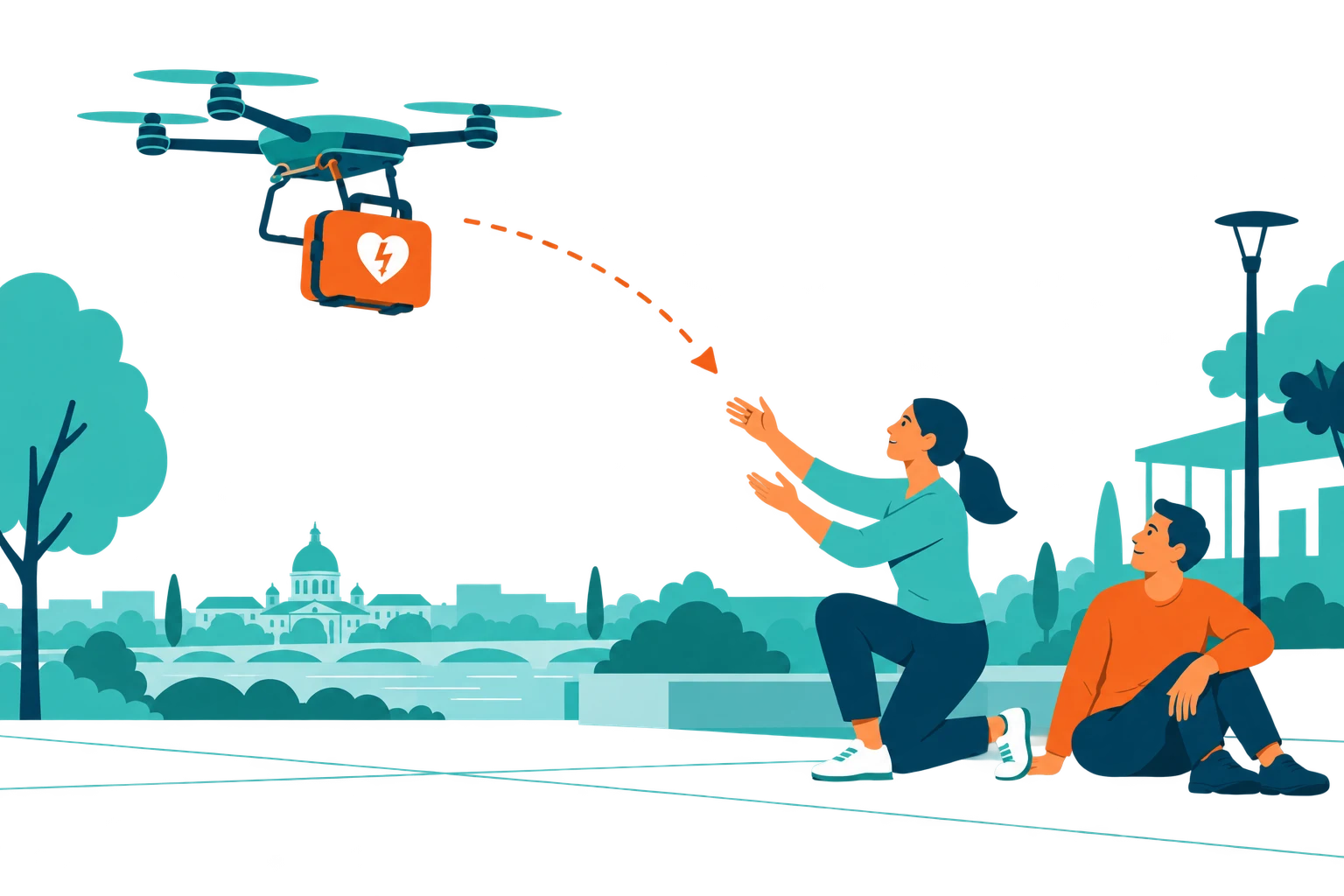
Comparable arrivals where the drone delivered the defibrillator first.
A safer place to work
Care belongs at work, too.
Protecting people also means caring about the risks they face at work. Inspectors may need ropes, scaffolding or elevated platforms to reach a measurement point. We want a useful inspection to demand less exposure to danger.
HSE's provisional figures for Great Britain in 2025/26 record 31 worker deaths from falls from height, out of 126 work-related worker fatalities across all industries. [2]
If a robot can take a measurement at an exposed location, an inspector may be able to do that part of the job from a safer position. That is a purpose worth working toward.
Worker fatalities caused by falls from height, Great Britain, 2025/26.
An ambition for inspection
Bring the tool to the hard-to-reach place.
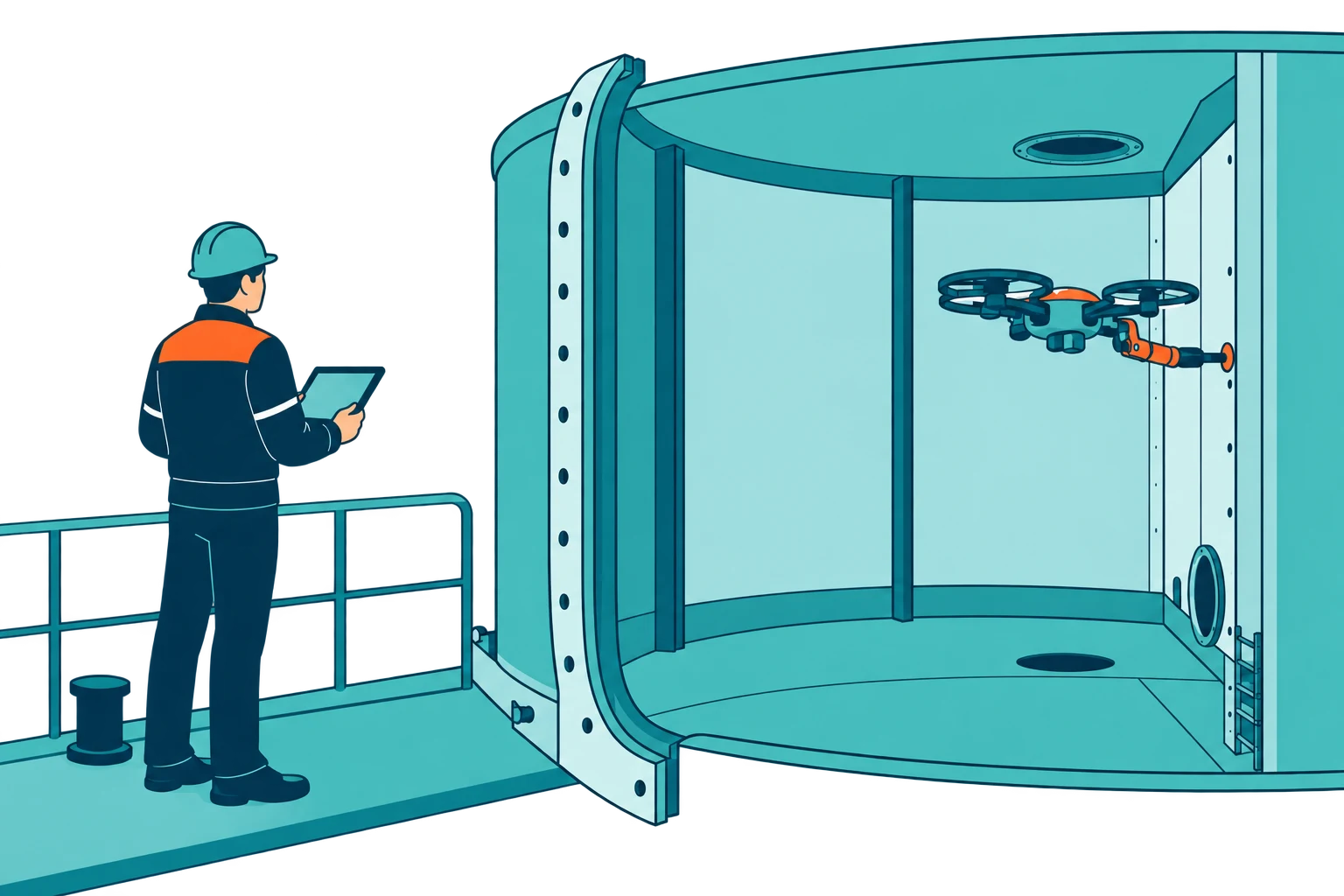
That ambition extends to confined spaces. AUTOASSESS describes surveyors entering ships' ballast tanks and cargo holds to inspect their structures. Difficult access, darkness, slippery surfaces and hazardous atmospheres can make this demanding work dangerous. [3]
The project aims to use aerial robots for inspection and keep surveyors out of harm's way. It is an example of how the place where a measurement is taken could change, while people still need the information that measurement provides.
People at the center
Send the tool.
Keep the expertise.
For us, the purpose of an aerial robot is to support the people doing the work. Their knowledge, judgment and responsibility remain essential. We want inspectors to be able to apply those skills from a safer place.
People choose the task, supervise the operation, interpret the readings and decide what needs attention. Useful autonomy should give them better access to evidence and the ability to intervene.
Sources
Sources checked on 26 October 2026. External examples describe their own systems and conditions. The human role described here expresses Volar's purpose.
- Schierbeck et al., The Lancet Digital Health (2023). Prospective observational study in Sweden: 37 earlier AED deliveries among 55 comparable arrival times. Two patients were defibrillated before ambulance arrival; one achieved 30-day survival.
- HSE: work-related fatal injuries in Great Britain, 2025/26. Provisional counts: 126 worker fatalities, including 31 falls from height.
- About AUTOASSESS: the problem and the project. Marine inspection hazards and the project's aim to keep surveyors out of dangerous spaces.
- AUTOASSESS Open Call #2 winners: SOAR-NDT. The public description of the tactile and pulsed eddy current inspection approach. It describes the project direction, not completed validation.